Plot and Subplot: Types, Examples and How to Weave Them
November 21, 2026 · Equipo Style Optimizer
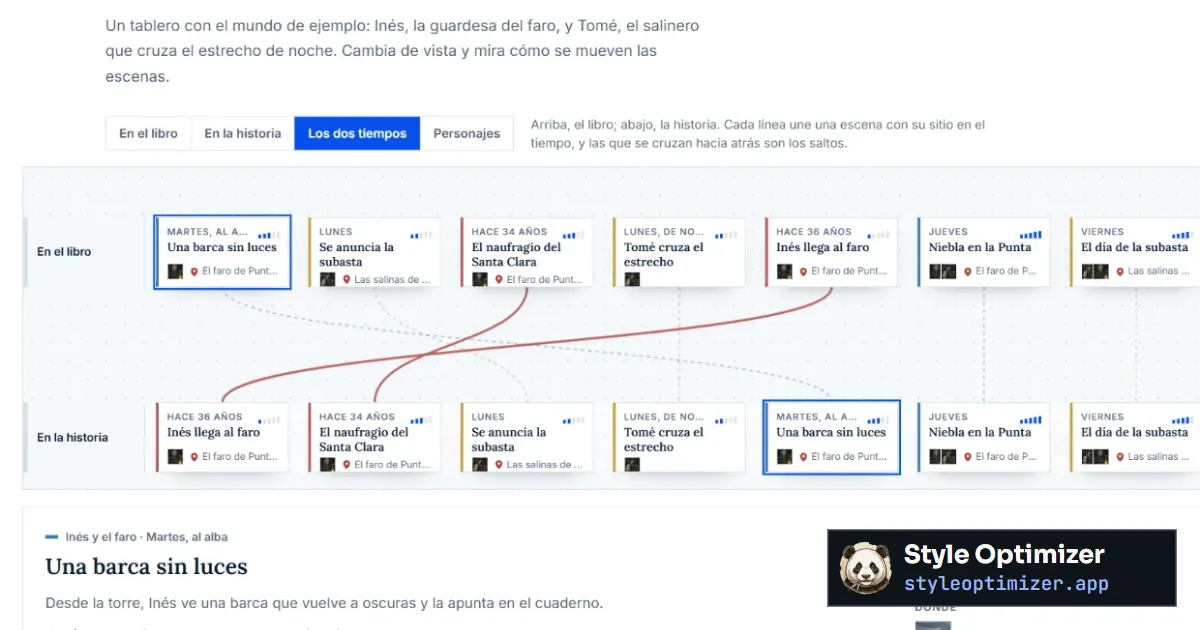
A subplot is a secondary story that runs alongside the main plot, with its own conflict, and crosses it to complicate it or give it meaning. The plot is the chain of events that takes the protagonist from the conflict to its resolution; subplots surround it with shorter lines, often carried by secondary characters. Below you’ll find a simple way to sort your scenes into A, B and C plots and see how long each one takes to come back.
Template: sort your scenes into plots
You can do this with index cards, a spreadsheet or a sheet of paper:
- List your scenes in reading order, one line or one card each.
- Label each scene with its plot: A for the main plot, B and C for the subplots.
- Draw one lane per plot, a horizontal row for each letter, and mark every scene in its lane.
A lane with a long gap points to a plot readers may forget. In Style Optimizer, the outline board does this for you: you write your scenes, assign each one its plot and switch to the lanes view.
Plot vs. subplot: the differences
| Main plot | Subplot | |
|---|---|---|
| Who carries it | The protagonist | The protagonist in another area of life (love, family) or a secondary character |
| Conflict | The novel’s central one | Its own, smaller one |
| Space | Most of the scenes | A share, spread across the book |
| Resolution | At the climax | Before the climax or within it |
| What it’s for | Tells the story | Complicates, gives breathing room, reflects the theme or shows another side of a character |
Television writers talk about A, B and C plots according to their weight, and the labels work just as well for novels. The A plot takes up the most scenes; the B plot fewer, and it often carries the theme; the C plot is a minor thread, sometimes a comic one.
A classic example comes in Part Two of Don Quixote: the chapters alternate between Sancho’s governorship of the island of Barataria and Don Quixote’s adventures in the duke and duchess’s palace. Each line has its own conflict, and each sheds light on the other: the squire governs with better judgment than his master.
Types of plot
By how many lines the novel has
- Linear. A single plot, sometimes with a minimal subplot. Common in short stories and novellas.
- With subplots. One main plot and two or three secondary ones that cross it. The most common shape for a novel.
- Parallel plots. Two or more stories of similar weight that move forward at the same time, sometimes without touching until the end.
- Ensemble. Many lines and no single protagonist: the protagonist is the group, the place or the era.
- Frame story. A story inside another, as in One Thousand and One Nights, where Scheherazade tells tales to save her life.
By storyline
Several authors have tried to reduce every story to a list. Christopher Booker proposed seven basic plots in The Seven Basic Plots (2004):
| Type of plot | What it involves |
|---|---|
| Overcoming the Monster | The hero confronts a threat and defeats it. |
| Rags to Riches | Someone humble gains something, loses it and wins it back having grown. |
| The Quest | A journey toward a distant goal, with trials along the way. |
| Voyage and Return | Going to a strange world and coming back changed. |
| Comedy | Misunderstandings and tangles resolved in a happy ending. |
| Tragedy | A flaw or an ambition drives the protagonist to ruin. |
| Rebirth | Someone trapped in darkness emerges from it transformed. |
There are longer lists: Georges Polti counted thirty-six dramatic situations in 1895, and Ronald B. Tobias twenty master plots in 1993. They help you recognize which story you’re telling and what readers expect from it.
Types of subplot
- Mirror. Repeats the main conflict in miniature or in reverse. If the protagonist can’t forgive her father, a secondary character who does forgive his own shows her the road she isn’t taking.
- Complication. Puts obstacles in the main plot’s way: a debt, an illness, a rival.
- Romantic. A relationship that grows or breaks while the main action moves forward, very common as the B plot.
- Antagonist’s. What the rival does while the protagonist isn’t looking. It raises the tension because readers know more.
- Backstory. An earlier story revealed bit by bit that explains the present.
The mirror subplot pays off the most, because it makes the theme visible without having to explain it. If yours leans toward character, see also character arc.
Parallel plots and ensemble novels
In parallel plots, two stories of similar weight move forward in alternation. Anna Karenina is the great example: Anna and Vronsky’s love, which ends in disaster, set against Levin and Kitty’s, which ends in a marriage and a question about the meaning of life. Anna and Levin meet only once, late in the novel, and still each story comments on the other.
The ensemble novel takes this further: many voices and no center. George Eliot’s Middlemarch weaves together the lives of a provincial English town, and Colum McCann’s Let the Great World Spin links the lives of very different New Yorkers around Philippe Petit’s 1974 tightrope walk between the Twin Towers. In an ensemble novel, each line needs its own desire and conflict, even if it fills only a few pages, and readers need a shared place or event to orient themselves.
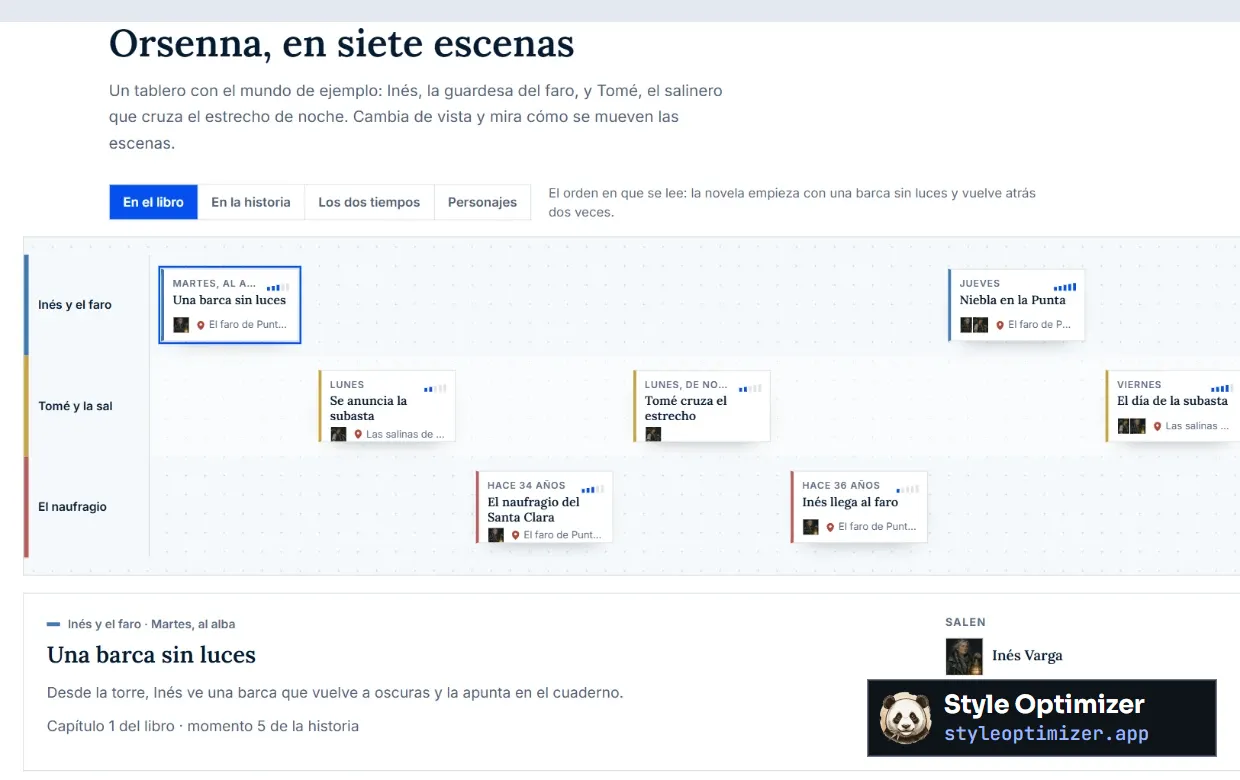
The clearest way to see these structures is in lanes. On Style Optimizer’s outline board, each plot has its own colored lane and each scene is a card. The sample board tells the story of Orsenna in three plots: Inés and the lighthouse, Tomé and the salt, and The Shipwreck.
How to weave plot and subplot together
- Give each subplot three moments: a sprout (where it begins), a crossing (where it touches the main plot) and a close (how it ends or what it leaves open). On the outline board, each subplot can have its own lane with those three moments.
- Make them cross at the turning points. Subplots carry weight when their outcome pushes the main plot: a secondary character’s secret discovered right at the second turning point.
- Watch the absences. A plot that goes too many scenes without appearing cools off. As a rule of thumb, don’t let any plot stay offstage for more than a quarter of the book.
- Use plot switches for pacing. Cutting away at the high point of one plot and jumping to another keeps the tension up; returning to a quiet plot after a strong scene gives readers room to breathe.
- Close them all, or leave open, on purpose, the one you want to leave open. A forgotten subplot stands out more than a subplot without an ending.
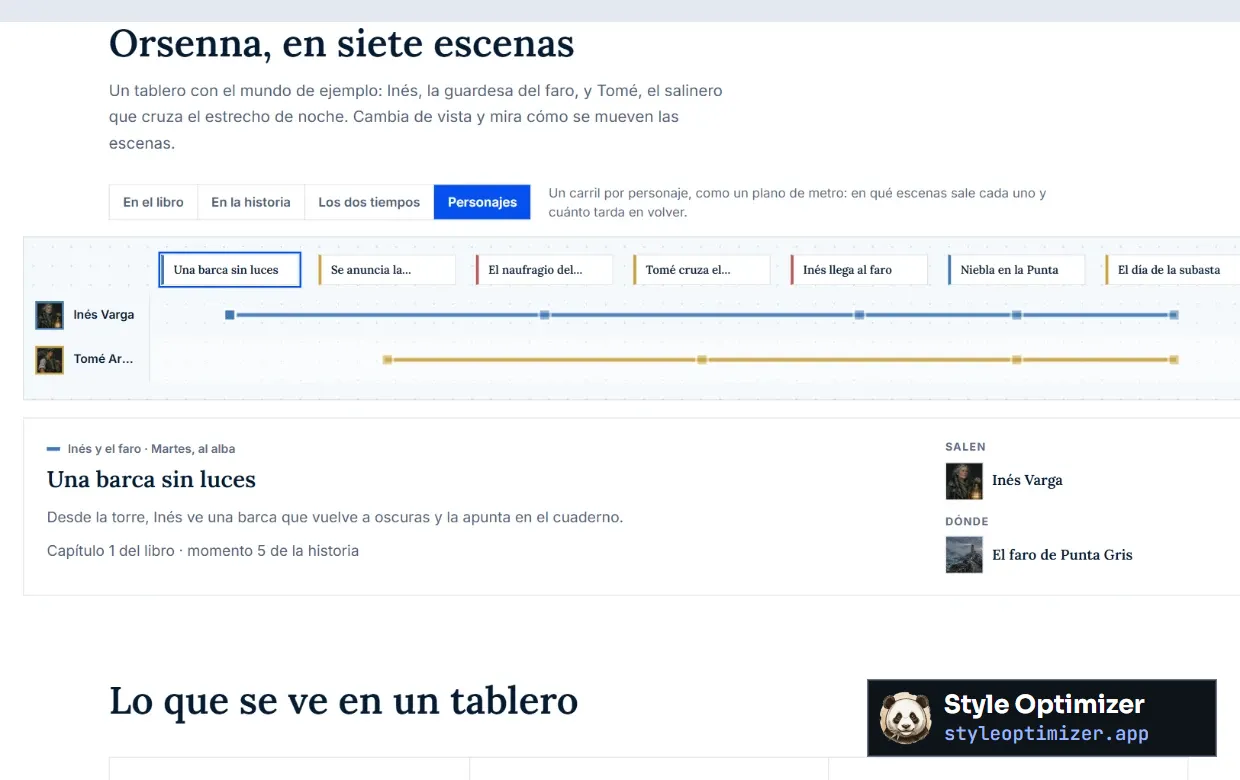
The outline board helps with points 3 and 5. Its Characters view gives each character a lane, like a subway map, and shows how long each one takes to come back. The board also warns you when a plot has gone many scenes without appearing, or when it’s still open and you haven’t marked it closed.
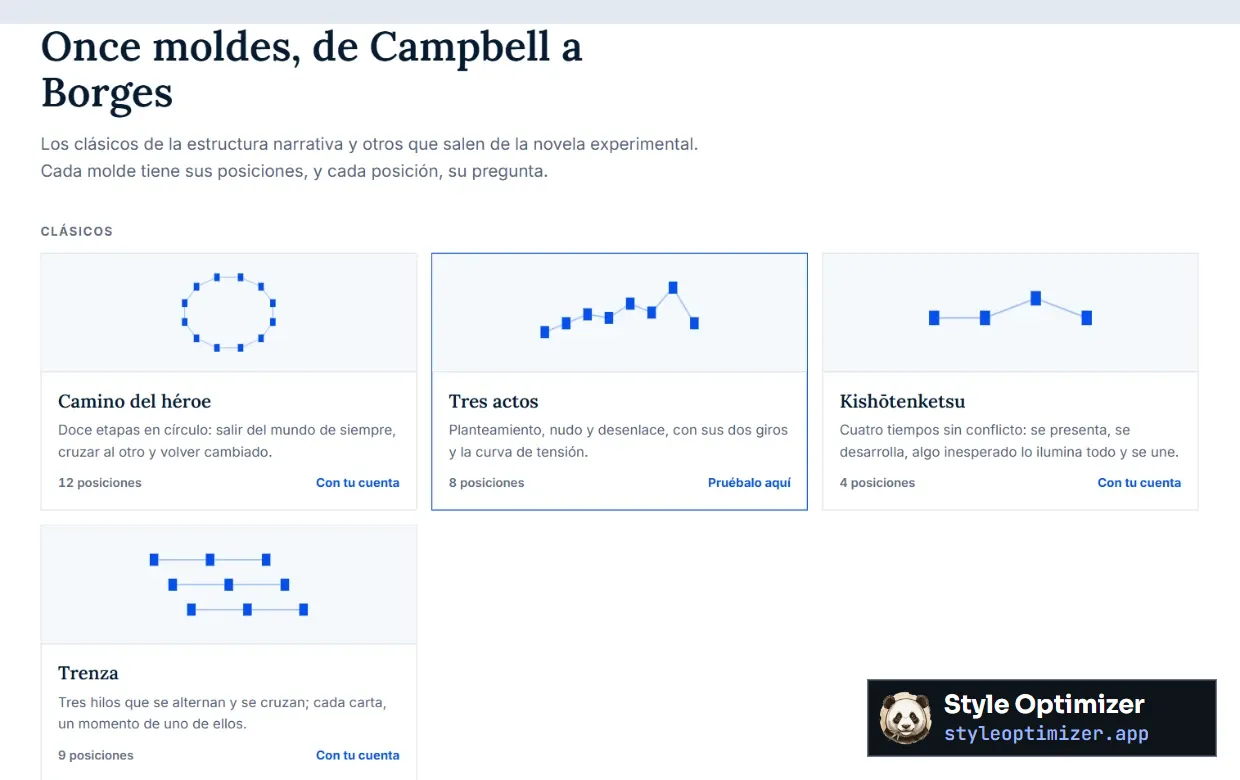
If you’re looking for a shape for your plots, the outline board’s templates include the Braid: three threads that start far apart, brush against each other and knot together at the end, with a question at each position and each thread in its own lane.
To place your subplots within the whole, review novel structure and, scene by scene, the scene outline. In Save the Cat, the B story even has its own fixed beat.
Plot and subplot FAQ
How many subplots should a novel have?
It depends on length. A novel of around 80,000 words can usually carry two to four subplots without losing readers; a short story rarely has more than one. The practical test is that each subplot has at least a sprout, a crossing with the main plot and a close, and that every one of them serves the story or its theme.
What’s the difference between a subplot and parallel plots?
A subplot is subordinate to the main plot: it takes up less space and exists to complicate or reflect it. Parallel plots carry similar weight and move forward at the same time, each with its own protagonist, as in Anna Karenina. In practice the line is gradual, and a highly developed subplot ends up working as a parallel plot.
What is an ensemble novel?
A novel without a single protagonist, in which many voices and plots share the weight of the story. The center is usually a place, an era or a shared event. George Eliot’s Middlemarch, with its provincial town, and Colum McCann’s Let the Great World Spin, with its New York of 1974, are two well-known examples.
How do I write a subplot that doesn’t distract from the main plot?
Connect it to the theme or to the central conflict. A mirror subplot repeats the protagonist’s dilemma in another character; a complication subplot puts an obstacle in their way. Have it cross the main plot at the turning points, and close it before the climax or within it, so the ending gets everyone’s full attention.
What are the most common types of plot?
By structure: the linear plot, the plot with subplots, parallel plots, the ensemble novel and the frame story. By storyline, a widely cited classification is Christopher Booker’s: Overcoming the Monster, Rags to Riches, the Quest, Voyage and Return, Comedy, Tragedy and Rebirth. They help you recognize the story you’re writing.