How to Create a Fictional Language for Your Novel
November 21, 2026 · Equipo Style Optimizer
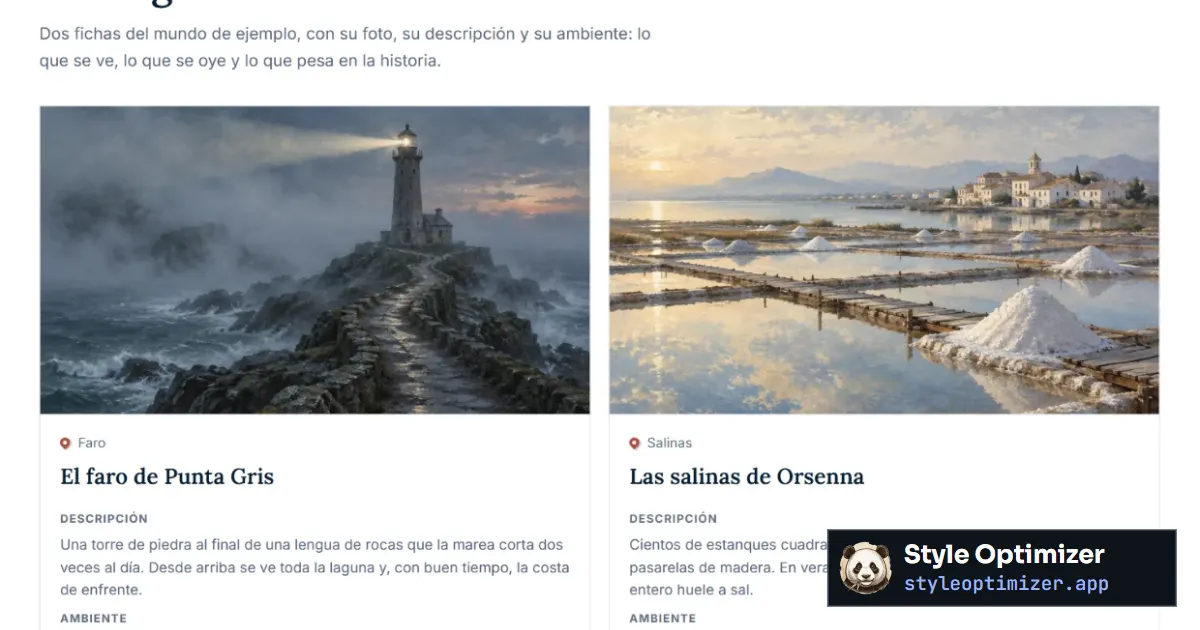
To create a fictional language for your novel, you need four pieces: a closed list of sounds, a rule for building syllables, a few dozen roots with meanings and two or three grammar rules for combining them. That’s enough to produce names, place names and the odd phrase that all sound like the same language. Below you’ll find a word recipe you can run on paper, the method step by step and a complete example built on the places of Orsenna.
A word recipe you can run on paper
Before you plan anything, try this quick exercise. It shows how a handful of rules produces words that belong together.
- Write nine consonants on one line and four vowels on another. Leave out a few letters on purpose.
- Pick a syllable shape, such as consonant + vowel, with an optional consonant at the end.
- Build twenty words of two or three syllables by combining the letters, following the shape every time.
- Read them aloud and keep the five you like best. Those five already sound like one language, and the steps below turn them into a system.
How much language does your novel need?
Before you invent anything, decide how far you’re going to take it. Most novels only need their names to sound as if they came from a real language, and you can get there in an afternoon.
| Level | What it includes | What kind of novel |
|---|---|---|
| A naming language | Sounds, syllables and about twenty roots | Fantasy or science fiction where the language only surfaces in names and places |
| A phrase language | All of the above, plus plurals, possessives, word order and about a hundred roots | Stories with greetings, oaths, songs or inscriptions |
| A full language | Complete grammar, a large vocabulary and a history of how it changed | Projects where the language is part of the plot, or film and TV adaptations |
Start with the first level. If the story asks for more, the language can grow from what you already have without contradicting itself.
Step 1: choose the sounds
Make a closed list of consonants and vowels. What you leave out defines the language as much as what you put in: a language with no u and no g sounds different from English even if every other letter is the same. Think about who speaks it. A coastal people with names of wind and salt might use plenty of s, l and r; a mountain people, plenty of k and consonant clusters.
As an example, the old coastal language of Orsenna, Style Optimizer’s sample world, uses these sounds:
| Type | Sounds it uses | Sounds it never uses |
|---|---|---|
| Consonants | p, t, k, m, n, s, l, r, v | b, d, g, f, z, j, ch |
| Vowels | a, e, i, o | u |
Step 2: decide what syllables look like
The shape of the syllable is what the ear picks up first. Write it with letters: C for consonant and V for vowel. A language that only allows CV (ka-ri-to) sounds open and musical; one that allows CVCC (kerst) sounds harsh. Add two or three more rules: which consonants can end a word and which clusters are off limits.
In the coastal language, syllables are V, CV or CVC; no word starts with two consonants; and only n, l, r, s and k can come at the end. Those three rules give you words like lisen, tamor, okel and verani, all from the same family.
To try out a sound inventory before you commit to it, the invented language generator builds ten words at a time from your consonants, vowels and syllable shapes, and counts how many syllables and words they allow.
Step 3: invent roots with meanings
Roots are short words of one or two syllables that you give a meaning. Start with what your story will need to name: landforms, materials, colors, animals, trades, family ties. Twenty well-chosen roots will cover an entire map.
| Root | Meaning | Root | Meaning |
|---|---|---|---|
| ner | water | osi | salt |
| tor | stone | ila | light |
| ten | gray, fog | kav | crow |
| kel | island | vel | house |
| orsen | shore | -na | place of |
Step 4: a minimal grammar
A naming language needs only four rules. Write them down and follow them every time, because they’re what an attentive reader will notice:
- Compounds: the noun comes first and the word describing it comes second. Tor + ila, “stone of light.”
- Joining: if two consonants meet when you join two roots, slip an a between them. Kav + kel gives Kavakel.
- Plural: -i after a consonant and -r after a vowel. Tori, stones; osir, salts.
- Places: the suffix -na turns a word into a place. Orsen + na, “the place of the shore.”
With these rules you can write a set phrase or two without any verbs. The salt makers of Orsenna raise their cups with Ila tori, osi neri: “light for the stones, salt for the waters.”
Step 5: consistent place names and personal names
Lost languages survive in place names. England is full of them: the many rivers called Avon carry an old Celtic word for “river,” still alive in the Welsh afon, so “River Avon” really means “river river.” That’s the most rewarding use of a fictional language. The people who live there now speak something else, and the old names stay on the map as traces of whoever came before.
Here’s how the map of the Orsenna lagoon looks in the coastal language:
| Place | Old name | How it’s built |
|---|---|---|
| The Punta Gris lighthouse | Torila | tor (stone) + ila (light) |
| The Orsenna lagoon | Nerateni | ner (water) + a + ten (gray) + plural: “the gray waters” |
| Crow Island | Kavakel | kav (crow) + a + kel (island) |
| The salt pans | Osivel | osi (salt) + vel (house) |
| Orsenna, the town | Orsenna | orsen (shore) + na (place of) |
Look at the last one. Orsenna already had a name, and the language was built backward to explain it. That trick comes in handy when your world already exists: take your favorite names, break them into pieces and decide what each piece means. The rules will follow from there.
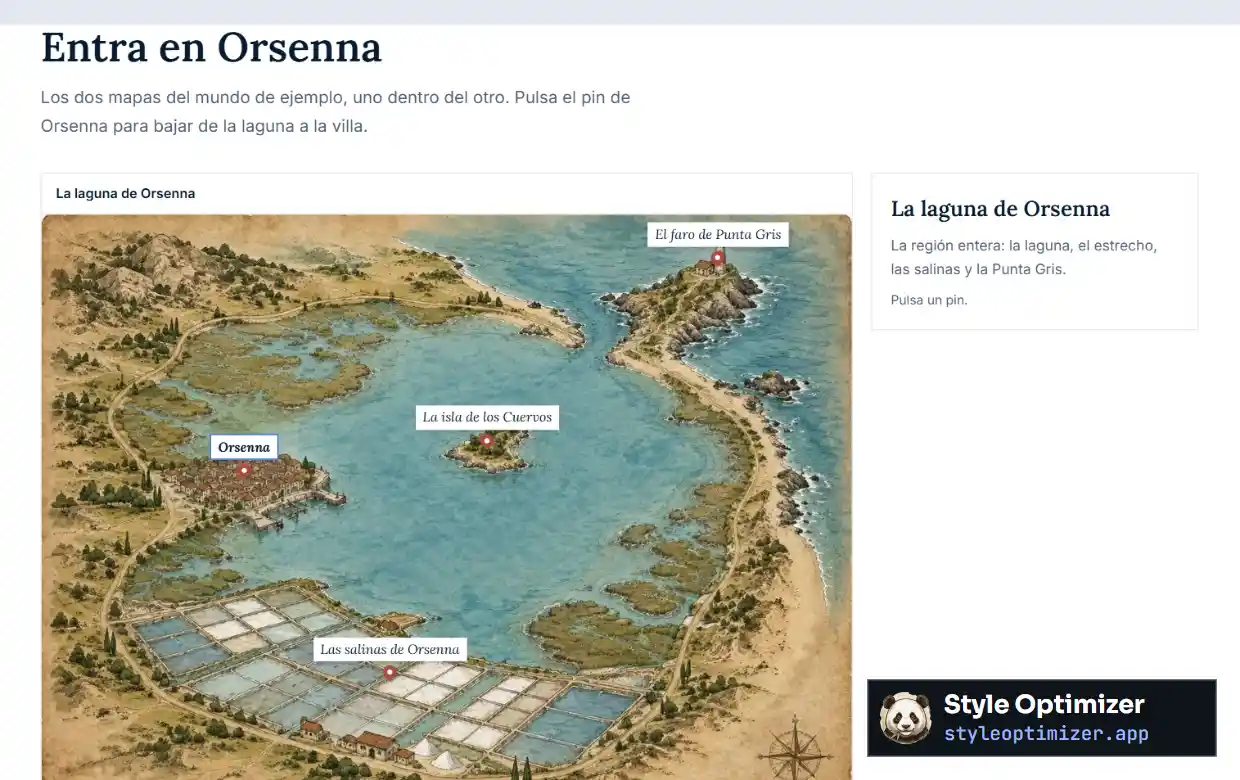
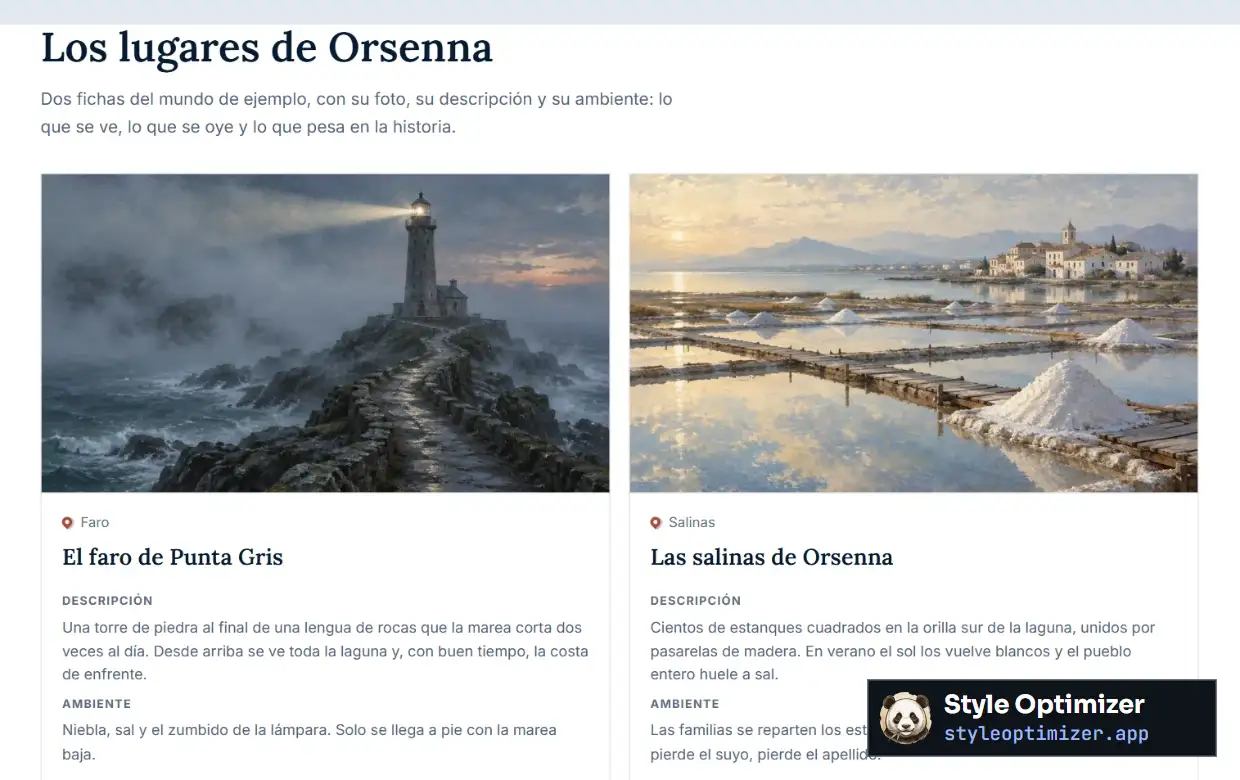
To keep your names in order, pin each place to the map. In Maps, you upload the image, add a pin for each place and every pin opens its profile. In Locations, you can note the old name and its meaning in the description, alongside the atmosphere and the chapters where the place appears.
Personal names draw on the same roots. A family of salt makers might be called Osiren, “the salt people,” and a girl born on a foggy night might be named Tena. You’ll find more ways to name entire peoples in our guide to fantasy names.
How to work the language into your novel
- A few words, many times. Readers learn ten terms that keep coming back; a hundred that each appear once wear them out.
- Let context translate. If a character raises a cup and says Ila tori, readers understand it’s a toast with no gloss needed.
- Readable spelling. Spell the language by English conventions so readers can pronounce it without hesitating, and save letters like k or v to mark what’s foreign.
- No lessons. Explaining grammar in the text is the fastest route to an infodump. If you want to share it, put it in a glossary or an appendix.
Fictional languages worth studying
J. R. R. Tolkien is the extreme case. A philologist, he invented his Elvish languages before his stories and once wrote that the tales were made to give those languages a world to live in. Quenya borrows its sounds from Finnish, and Sindarin from Welsh. At the other end is the professional conlang. For the TV series Game of Thrones, the linguist David J. Peterson turned the handful of Dothraki words in George R. R. Martin’s books into a language with a grammar and thousands of words. Peterson explains his method in The Art of Language Invention (2015). Marc Okrand did the same for Klingon in Star Trek.
Literature also uses invented languages to comment on real ones. Newspeak in George Orwell’s Nineteen Eighty-Four trims the vocabulary so that certain ideas become unthinkable, and Nadsat in Anthony Burgess’s A Clockwork Orange blends English and Russian to pull readers into the narrator’s slang. If you’re building the whole world, continue with how to create a fantasy world and keep everything together in Style Optimizer’s Fiction section.
FAQ: how to create a fictional language
How long does it take to create a language for a novel?
A naming language, with sounds, syllables and about twenty roots, comes together in an afternoon. A phrase language, with plurals, possessives and a hundred words, can take a few weeks of on-and-off work. A full language is a project of years. For most novels the first level is enough, expanded as the story asks for it.
Do I need to know linguistics to invent a language?
For a naming language, a good ear and consistency are enough: decide which sounds you use and stick to your own rules. Knowing other languages helps, because they show you options English doesn’t have, like words that can’t end in a vowel or plurals that change the root. If you want to go further, David J. Peterson’s book is a good way in.
How do I make the names in my language sound consistent?
Use a closed set of sounds, a fixed syllable rule and roots that repeat. When two places share a root, like Kavakel and Kelanor if both are islands, readers sense a language behind them even if they never study it. Go through your full list of names every so often and cut any that use a forbidden sound.
Should I translate the words of my fictional language in the text?
Only when the meaning matters and context isn’t enough. The most natural approach is for a character who knows the language to translate it in dialogue, or for the action to make the meaning clear. Translations in parentheses interrupt the reading. If you have a lot of vocabulary, a glossary at the back lets curious readers look things up without slowing everyone else down.
What inspired Tolkien’s Elvish languages?
Tolkien was a philologist and a professor of Old English at Oxford. For Quenya, he modeled the sound on Finnish, which fascinated him, along with features of Latin and Greek; for Sindarin, he drew on Welsh. He also worked out how his languages changed over time, so they have an internal history the way real languages do.