Reader’s Report: What It Is, What a Publisher’s Reader Does, and an Example
November 24, 2026 · Equipo Style Optimizer
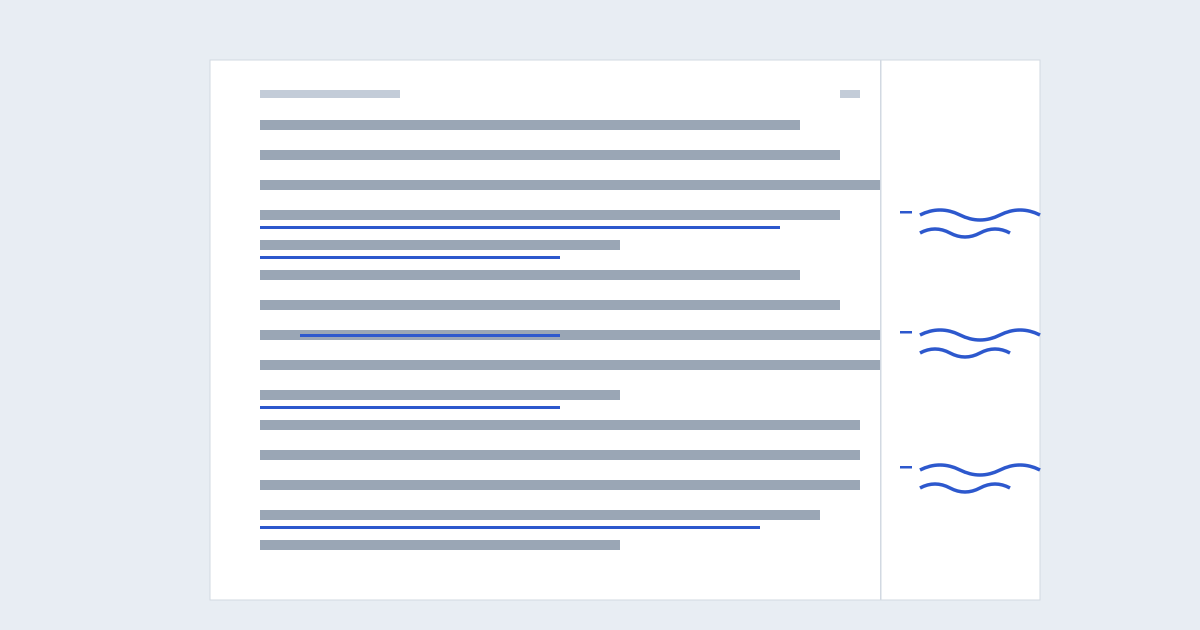
A reader’s report is the document a publisher’s reader writes after reading a manuscript: what it is about, how it is written, what works, what doesn’t, and whether the house should publish it. It is the first door almost any novel has to get through when it reaches a publisher.
This guide explains what a publisher’s reader does, what goes into a reader’s report and how to write one, with a full example. At the end, a free tool measures your chapter with the same figures a report starts with.
A reader’s report and a book report
The two are easy to confuse. At school and at college, a book report is an assignment on a book you have read: details of the work, a summary, themes and a personal opinion. In publishing, the reader’s report is a working tool for deciding what gets published. This article is about the second, although its structure also works as a model for the first.
What a publisher’s reader does
The publisher’s reader reads the manuscripts a publishing house or a literary agency receives and writes a report on each one. The job is to act as a filter: the editor receives far more submissions than anyone could read, and relies on the reader’s judgment to know which ones deserve the time.
- Reads by the house’s criteria, and sets personal taste aside: what the publisher publishes, which list the book would fit, who its readers are.
- Weighs two things at once: literary quality and commercial prospects.
- Recommends: publish, publish with changes, ask for a second read, or pass.
When the report is favorable, the house often commissions a second read from someone else before the editor reads the manuscript. Readers tend to be freelancers paid per report; many are translators, editors or writers.
The parts of a reader’s report
Every publisher has its own template, but almost all of them share these parts:
- Fact sheet. Title, author, genre, length in words or pages, language, audience and, for a translation, the original publisher.
- Synopsis. The whole story, ending included, in half a page to a page.
- Literary assessment. Structure, characters, voice, style, pace, dialogue and consistency, with examples from the text.
- Commercial assessment. Which reader it is for, which books it can be compared with, which list it fits and what it competes against.
- Recommendation. A clear conclusion and, where relevant, the changes the text would need.
The usual length is two to four pages. The editor has to be able to read it in five minutes.
A sample reader’s report
A shortened report on an invented novel, to show how the space is divided up:
| Title | The Lighthouse |
|---|---|
| Genre | Realist novel, fiction of memory |
| Length | 64,000 words (about 260 pages) |
| Audience | Readers of contemporary literary fiction |
Synopsis. After her mother’s death, Lucía goes back to the lighthouse where she grew up to clear out the house. She finds a tin box of letters from an aunt nobody ever talked about. Following the letters, she discovers that the aunt never emigrated: she lived in the next village, and Lucía’s mother wrote in her name for the grandmother, who could not read. The novel ends with Lucía writing the last letter.
Literary assessment. The voice, first person and restrained, is the book’s great strength: the objects (the staircase, the lamp, the box) carry what the characters leave unsaid. The structure suffers in chapter 4, which is twice the average length and stops the action with a long reflection. At the most emotional moments, the narrator tends to name the feeling where elsewhere in the book she shows it with a gesture.
Commercial assessment. It fits within fiction of grief and family memory, with loyal readers and a good reception in book clubs. The coastal setting and the mystery of the letters make it easy to pitch.
Recommendation. Publishable with changes: rebalance chapter 4 and revise the four or five passages where the emotion is explained. I recommend a second read.
How to write a good reader’s report
- Read the whole manuscript. A report on the first three chapters assesses an opening, and a book is more than that.
- Back every judgment with the text. A quote or a specific page turns an opinion into an argument.
- Separate taste from judgment. “I don’t like crime fiction” is about the reader; “the investigation moves forward by coincidence” is about the book.
- Write for the editor: brief, clear, with the recommendation at the top or at the end, and no beating around the bush.
- Tell apart what can be fixed from what can’t. A long chapter can be cut; a premise with no interest stays that way.
How to become a publisher’s reader
There is no required qualification. What publishers ask for is judgment you can demonstrate and reliability with deadlines. It helps to have studied literature, publishing or translation; to have taken a course on reading for publishers; to read in other languages, because many reads are of foreign books; and to have two or three reports of your own to show as samples. Small presses and literary agencies are the most common way in.
A reader’s report for your own manuscript
The publisher’s report is written for the editor: its question is whether to publish. A writer needs a different one, often called a manuscript assessment: one that says what works, where to put the work in and where to start revising before sending the text out. That is what Style Optimizer’s reading report does: it reads your whole manuscript, ties every observation to a passage of your text and ends with three revision priorities. Like many professional readers, it starts with the numbers of the prose.
Your chapter in numbers
Paste a chapter or a scene. The tool calculates, in your browser, sentence rhythm, dialogue, readability, close echoes and tics, with a reading of each figure.
Frequently asked questions about reader’s reports
How long is a reader’s report?
Two to four pages at most publishers. Some use a one-page form with checkboxes and a paragraph of assessment.
Will the publisher send me the report on my manuscript?
Almost never: it is an internal document. That is why it makes sense to get a read of your own before you submit, whether from a professional reader, from readers you trust or from a tool.
What is the difference between a publisher’s reader and a beta reader?
The publisher’s reader works for the publisher and assesses whether the book gets published. A beta reader (or an alpha reader) reads for the author, before submission, and reports on the experience of reading it.
What goes into a school book report?
Details of the work and the author, a summary, the themes, the main characters and a reasoned opinion. The parts of a publisher’s report (fact sheet, synopsis, assessment and recommendation) work as a model.
If you are comparing services, read how much a manuscript assessment costs.